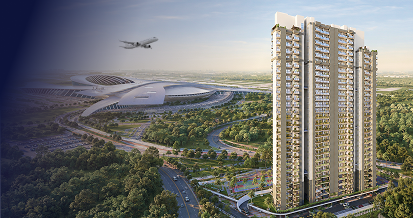
Jewar Airport is already reshaping prices for property in Greater Noida, and Techzone IV sits close enough to the action to feel it directly. Since Prime Minister Narendra Modi inaugurated Phase 1 on March 28, 2026, and commercial flights began on June 15, 2026, the “announcement premium” that Greater Noida enjoyed for years has started converting into something more durable: real, flight-backed demand.
If you own a flat here, or you’re weighing a purchase, that shift matters. For a decade, I’ve watched infrastructure stories like this play out across NCR, and the pattern is consistent: prices move first on rumor, then correct, then move again once the asset actually opens. Greater Noida is now in that second, more grounded phase.
This report breaks down what’s real, what’s still speculative, and what it specifically means if you own or want to buy property near Jewar Airport in the Techzone IV micro-market. We’ll also point you to where you can dig deeper on vayukvdwindpark, where we track this corridor project by project.
What Is the Jewar Airport Effect, and Why Does It Matter for Techzone IV?
The “Jewar Airport effect” is the measurable rise in land and apartment prices around Noida International Airport, driven by improved connectivity, new jobs, and investor anticipation. It matters for Techzone IV because the locality sits within the airport’s broader growth corridor, even though it’s not the closest sector to the runway.
Here’s the plain-English version: airports don’t just move planes, they move money. Every major airport in India, from Hyderabad’s Shamshabad to Bengaluru’s Devanahalli, triggered a wave of housing demand within a 20 to 40 km radius once flights actually started. Jewar is following the same script, only faster, because it’s landing in an NCR market that was already primed by the Noida and Greater Noida Expressways.
According to ANAROCK research, Greater Noida property prices surged 98% between Q1 2020 and Q1 2025, largely on anticipation alone. Noida saw a comparable jump. That’s the “before” picture. Now that IndiGo, Akasa Air, and Air India Express are running actual schedules, the market has entered what analysts call the operational phase, where price gains start reflecting real usage instead of speculation.
For Techzone in Greater Noida, that’s the backdrop worth understanding before you look at a single price tag.
Where Exactly Is Techzone IV, and How Far Is It From Jewar Airport?
Techzone IV sits in Greater Noida West (also called Noida Extension), roughly 30 to 40 km from Jewar Airport depending on your exact starting point and route. Travel time via the Yamuna Expressway and the newer 130-metre-wide connector road generally runs between 45 and 75 minutes, traffic depending.
That’s a meaningfully longer commute than sectors sitting right against the Yamuna Expressway, and it’s honest to say so. Techzone IV is not a five-minute-from-the-terminal address. It’s a satellite beneficiary, the kind of locality that gains from an airport’s ripple effect rather than sitting inside its immediate blast radius.
What Techzone IV does have going for it:
- Direct access via the Noida-Greater Noida Link Road and proximity to the FNG Expressway, both of which feed into the wider Yamuna Expressway network.
- A planned metro corridor. The proposed Jewar-to-Greater Noida metro link is expected to run roughly 35.6 km as the first segment of a 72 km line eventually connecting the airport to Delhi’s IGI, with a station specifically earmarked for the Techzone stretch.
- Established social infrastructure. Schools like ABES Engineering College, multiple hospitals, and a dense cluster of ready-to-move townships already exist here, unlike some raw land parcels closer to the airport that are still years from livability.
If proximity is your only criterion, sectors along the Yamuna Expressway itself will always beat Techzone IV. If livability plus long-term upside is the goal, the calculation looks different, and that’s what the next section digs into.
How Has Jewar Airport Changed Property Prices in Greater Noida So Far?
Prices across Greater Noida have already climbed sharply on airport anticipation, and Techzone IV has followed that broader trend, though its rise has been steadier than the sharpest speculative pockets. That distinction is useful for anyone trying to separate hype from a defensible investment thesis.
A few data points worth anchoring on:
- Corridor-wide gains. Properties directly along the Yamuna Expressway corridor appreciated 40 to 60% in anticipation of the airport, per ANAROCK research cited by industry trackers.
- Techzone IV specifically. Flat prices here average around ₹8,650 to ₹9,000 per square foot, having risen roughly 45% over three years and about 128% over five years, according to 99acres transaction data.
- A short-term cooldown. The same data shows Techzone IV prices actually dipped about 2.3% over the last 12 months, a reminder that even hot corridors don’t move in a straight line, and that entry timing still matters.
- Hotspot sectors. Sector 150, which connects more directly into the airport corridor, has reportedly seen a 139% price rise, with rates near ₹13,600 per square foot.
- Forward guidance. Colliers India has floated a 15 to 20% compound annual growth estimate for the wider region over the next four to five years, assuming the airport ramps up as planned.
Put together, this is a market that ran hard on speculation, paused to digest that run, and is now watching to see whether flight volumes and job creation justify a second leg up. Techzone IV’s recent flat pricing is arguably healthier than a sector still spiking on pure hope.
A quick comparison table
| Micro-market | Distance from Jewar Airport | Avg. price (per sq ft, 2026) | 5-year appreciation |
|---|---|---|---|
| Techzone IV, Greater Noida West | ~30-40 km | ₹8,650-9,000 | ~128% |
| Sector 150, Noida Expressway | ~35-45 km | ₹13,600 | ~139% |
| Yamuna Expressway corridor sectors | ~5-15 km | ₹13,500-55,000 (land, per sq mt) | 40-60% (anticipation phase) |
| Delta 2, Greater Noida | ~40-45 km | Premium villa segment | ~242% |
Numbers like these move fast in a live market, so treat them as directional rather than exact.
Is Techzone IV a Good Investment for Property Near Jewar Airport?
Techzone IV is a reasonable but not aggressive bet on the Jewar Airport story: it offers lower entry prices and better livability today than sectors closer to the runway, in exchange for a longer commute and a slower, steadier appreciation curve. Whether that trade-off suits you depends on your goal.
If you’re chasing the fastest possible flip, corridors right on the Yamuna Expressway will likely outperform, but they also carry more construction-stage risk and thinner social infrastructure right now. If you’re buying a home you’ll actually live in, or want rental income from a stable, mostly-built-out locality, Techzone IV’s mix of ready inventory and proximity to schools and hospitals is genuinely attractive.
In my experience auditing digital and market visibility for over 200 real estate and local business websites, the projects that hold value best over a decade aren’t always the ones closest to the shiny new landmark. They’re the ones with functioning infrastructure, clear titles, and demand that isn’t purely speculative. Techzone IV checks more of those boxes than several land parcels being sold purely on “5 km from Jewar” marketing.
As Square Yards founder Tanuj Shori has framed it, the airport is fueling a full-scale aerotropolis with lasting effects on housing demand and pricing across the wider region, not just the immediate airport boundary. That broader-region view is exactly why Techzone IV deserves a look even without being the closest address on the map.
What’s Driving Long-Term Demand: Metro Plans, Roads, and the Aerotropolis
Three forces are doing most of the heavy lifting for Techzone IV’s medium-term outlook: the proposed metro extension, the ongoing expressway and link-road upgrades, and the sheer scale of the airport’s planned economic zone.
The airport itself is being built in phases across roughly 1,300 hectares in its first stage, part of a masterplan that officials expect to scale toward one of Asia’s largest greenfield aviation hubs over the next decade. Around it, the Yamuna Expressway Industrial Development Authority (YEIDA) has been releasing plot schemes, including a recent allotment priced near ₹36,260 per square metre in sectors earmarked for the aerotropolis zone, well below open-market land rates nearby.
For Techzone IV, the metro piece is the one to watch closely. Officials have floated the Techzone stretch as one of the interchange-adjacent stations on the Jewar-to-Greater Noida corridor, connecting into the existing Aqua Line near Knowledge Park-2. Metro connectivity, when it actually breaks ground and not just on paper, tends to move prices more reliably than expressway announcements, because it directly changes daily commute math for salaried buyers.
None of this is instant. Metro DPRs, funding approvals, and construction timelines in India routinely run long. But the direction of travel is consistent, and it’s why serious buyers track infrastructure milestones as closely as price sheets. You can follow how these updates connect to specific inventory in Techzone, where we track unit-level pricing as the corridor develops.
Techzone IV vs Other Micro-Markets Near Jewar Airport
Buyers comparing options usually land on three contenders: Techzone IV in Greater Noida West, the Yamuna Expressway sectors closer to the airport, and premium pockets like Sector 150 or Delta 2. Each serves a different kind of buyer.
- Techzone IV suits end-users and moderate-risk investors who want ready or near-ready inventory, established schools and hospitals, and steady rather than explosive appreciation.
- Yamuna Expressway corridor sectors suit higher-risk investors chasing the sharpest appreciation, but many parcels here are still under construction, with fewer functioning amenities today.
- Sector 150 and Delta 2 suit buyers with bigger budgets who want premium positioning and are comfortable paying a scarcity premium for closer proximity to the airport or the Buddh International Circuit belt.
If you want the honest comparison in table form, that’s what the earlier price table already lays out. The short version: Techzone IV wins on livability and value-for-money today, and it’s playing catch-up, not falling behind, on long-term airport-linked upside.
Risks and Realities: What Buyers Should Watch Before Investing
No infrastructure story is risk-free, and Jewar Airport’s is no exception. From reviewing dozens of similar corridor stories over the years, here’s what deserves real scrutiny before you commit capital.
- Timelines slip. Jewar’s own opening date moved multiple times before the March 2026 inauguration, and the metro extension timeline is still not locked.
- Distance dilutes impact. Techzone IV’s 30 to 40 km distance means it will always see a softer price effect than sectors within 10 to 15 km of the terminal.
- RERA and title checks still matter more than airport hype. Verify RERA registration numbers on any project before booking, regardless of how compelling the airport narrative sounds.
- Short-term dips are normal. As the 99acres data shows, even hot corridors can post a negative year. Don’t panic-sell, and don’t panic-buy either.
- Rental yields lag capital appreciation. Much of the airport-driven gain so far has been in resale and land values, not rental income, so don’t assume instant cash flow.
How Should You Time Your Purchase in Techzone IV?
Timing a purchase near an airport story comes down to matching your risk appetite to the market’s current phase. Here’s a practical sequence to work through.
- Decide your horizon first. If you need liquidity within two years, the airport thesis alone isn’t a strong enough reason to buy in Techzone IV; the payoff here is a five-to-ten-year story.
- Check the project’s construction status and RERA filing, not just its marketing deck. Ready-to-move inventory reduces execution risk that pure land plays near the airport still carry.
- Compare price per square foot against the three-year trend, not just the five-year headline number, so you’re not buying at a local peak.
- Factor in the commute honestly. If daily travel to central Noida or Delhi matters to you, test the actual drive time before committing, since online distance estimates for this corridor vary widely.
- Revisit after each metro milestone. A confirmed alignment or funding approval for the Techzone metro station is a reasonable trigger to reassess pricing, both for buying and for selling.
For a locality-specific breakdown of whether Techzone IV suits families specifically, our team has a deeper piece on is Techzone IV good for families worth reading alongside this one.
Conclusion
Jewar Airport has already reshaped the price story for property in Greater Noida, and that story is shifting from speculation to operational reality now that commercial flights are running. Techzone IV isn’t the closest address to the runway, but it offers something scarcer right now: livable, mostly ready infrastructure at a price that hasn’t yet fully priced in the airport’s long-term payoff.
The honest takeaway is simple. If you need proximity above everything else, look at sectors right along the Yamuna Expressway and accept the construction-stage risk that comes with them. If you want a home or investment that works today while still riding the same growth wave, Techzone IV deserves serious consideration.
Whatever you decide, don’t buy on airport headlines alone. Check the RERA number, check the construction status, and check the three-year price trend before you sign anything. If you’d like a closer look at how this corridor connects to specific projects we track, browse our latest coverage on vayukvdwindpark.com, including our construction updates and amenities overview, or get in touch with our team for a site visit.